
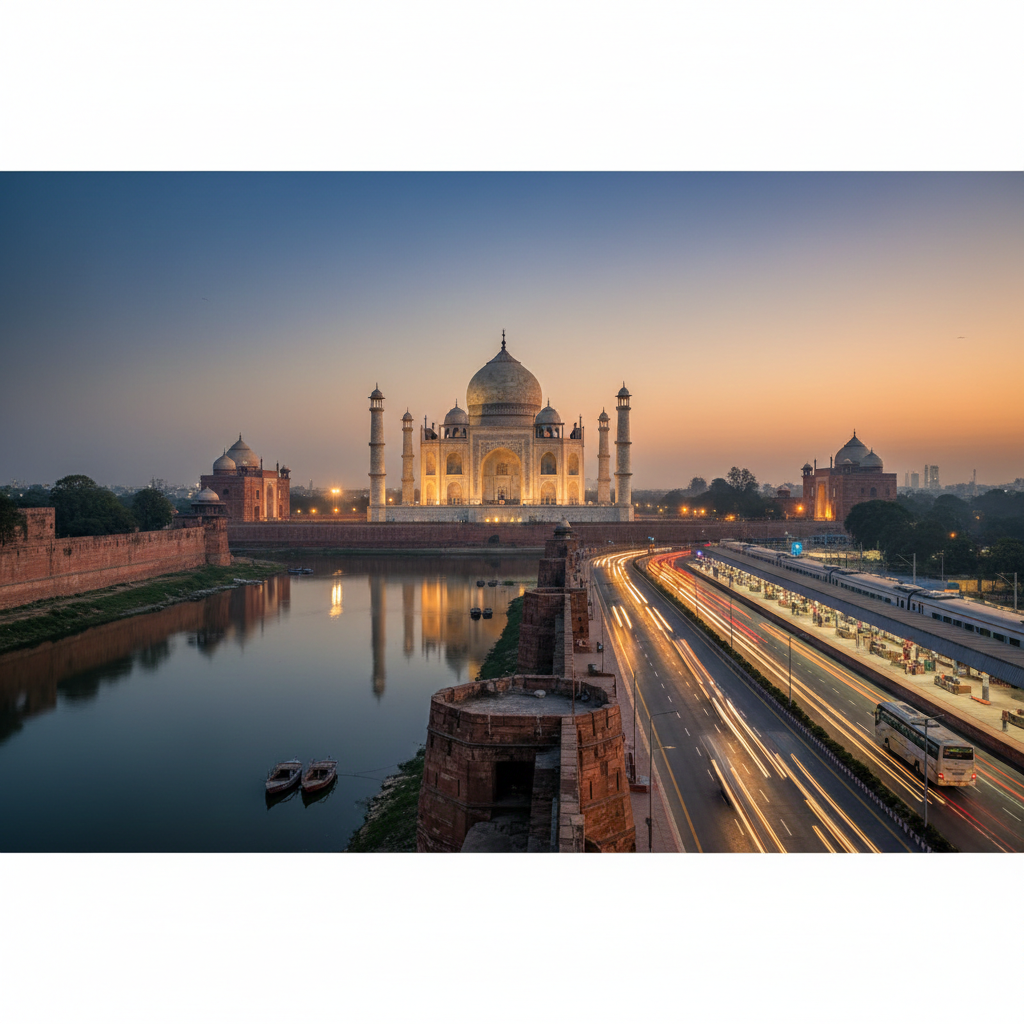
Agra stands out among India’s historic cities, famous for grand buildings from the Mughal era, tales of love, and fine artistry. Sitting beside the Yamuna River in Uttar Pradesh, it carries echoes of royal dreams and skilled hands at work. People come here from every corner of the world, drawn by structures shaping how the world sees Indian culture.
For visitors with limited time, an Agra one-day tour offers a complete and rewarding experience. Thanks to smooth highways and quick rail links, slipping Agra into your trip works without hassle – no matter if you plan it yourself or pick a package online. Those who want things running on time, with room to truly see what’s around, sometimes go with Majestic Taj Tours for their one-day trips.
The Taj Mahal: The Heart of Agra’s Global Fame
It’s hard to talk about Agra without starting at the Taj Mahal. This marble tomb, known among the world’s seven wonders, stands for lasting affection and masterful design. Rising under Shah Jahan’s order for his beloved wife Mumtaz, it holds a quiet power that draws people in. Few sights match its balance, few stories carry such weight – etched in stone, remembered in silence.
Early light wraps the marble gently, making it shine without harsh glare while fewer people wander near. Not until you see the detailed stone patterns up close does the scale of care become clear – verses from scripture flow across surfaces, joined by gardens set in exact lines. For travelers choosing a Delhi-Agra tour package, the Taj Mahal remains the emotional highlight of the journey.
Agra Fort: Power Politics and Royal Grandeur
A stone’s throw from the Taj Mahal sits Agra Fort, a place etched by time and now honored by UNESCO. Once home to Mughal rulers, it carried both power and presence. Built mostly of red sandstone, its walls speak of might, yet carry whispers of grace. Strength shaped every gate, while beauty lingered in courtyards untouched by haste.
Starting at the fort’s heart, people walk through Diwan-i-Am, a space once filled with public petitions. Moving deeper comes Diwan-i-Khas, quieter, meant for closed talks between rulers and select guests. Nearby stands Jahangir’s Palace, its walls holding centuries of private court life.
History lives here beyond marble – through corridors that held royal decisions, whispered rivalries, sudden betrayals. Every arch frames a moment when leadership clashed with fate under Indian skies. While palaces dazzle elsewhere, this fortress grounds the visitor in rule, resistance, and daily governance. Its walls do more than enclose – they reveal how ambition built empires then broke them.
Fatehpur Sikri Stands Still
Just outside Agra, roughly forty kilometers away, stands Fatehpur Sikri – a bold attempt at city building during Mughal times. Emperor Akbar ordered its construction, though residents eventually left because drinking water ran low. Despite being deserted centuries ago, much of the layout and structures still survive intact today.
The massive Buland Darwaza, Jama Masjid, Panch Mahal, and the tomb of Salim Chishti reflect a harmonious blend of Islamic and Indian architectural styles. Fatehpur Sikri is commonly included in extended itineraries and luxury golden triangle tours, offering travelers a quieter yet deeply immersive heritage experience.
Mehtab Bagh Seeing the Taj Differently
Over by the Yamuna River lies Mehtab Bagh, quiet and open, facing the back of the Taj Mahal without anything blocking the sight. Built for moonlit walks, it mirrors the Taj’s position along the water, balancing its shape on the opposite bank.
Fading light brings a hush, turning the monument into shifting shades of gold, pink, and silver. This corner of the garden draws photographers, pairs seeking calm – still framed by famous sights.
Mehtab Bagh slips quietly green into a day packed with grand stone monuments. While most sights shout history, this garden simply rests beside the Yamuna. Its open lawns answer the Taj Mahal’s formality with soft symmetry. Where marble dazzles, here shadows drape long across grass at sunset. Even crowded days find breath when paths lead under trees. The space does not compete – it completes. After hours of awe, stillness arrives without effort.
Itimad ud Daulah The Baby Taj
A small building tucked away from crowds, the tomb of Itimad-ud-Daulah wears its quiet fame well. White stone wraps every surface, long before such designs became famous elsewhere. Though few mention it by name, its artistry shaped what came after. Patterns carved here were refined years later in a more famous monument nearby.
Here, fewer people mean you can really see the fine details – like carved wood patterns, openwork grilles, maybe even the way light falls across quiet garden paths. This monument adds refinement and variety to itineraries booked through a tour booking website.
Kinari Bazaar and Local Markets
Fame here isn’t just carved in stone. Life spills onto sidewalks where hands shape small wonders every day. Near the old stations, stalls stacked pieces made of cooled rock dust – marble shaped slowly. One shop leads to another selling stitched hides and string-laced trinkets. Wares pass through fingers looking for something solid. Jewelry echoes patterns worn centuries back. Each lane holds a rhythm older than most cities. Markets breathe like they always have.
Street food lovers will find petha – Agra’s famous candy – sits beside tangy chaat and warm flatbreads shaped by generations of northern kitchens. Wander through bustling lanes where the scent of cumin and sugar pulls you into moments far from monuments, revealing how people eat, pause, and chat between errands.
Mughal Cuisine: A Flavor of Imperial Heritage
Once home to emperors, Agra feeds on the flavor built long ago. Korma fills plates just like in palace times, alongside biryani steaming with history. Heritage spots keep old methods alive, where fire and spice meet through hours of patience. Recipes travel straight from Mughal stoves into today’s serving bowls.
Meals shift into moments that echo local traditions. On high-end trips through India’s Golden Triangle, thoughtfully picked eateries tend to follow sightseeing in a smooth rhythm.
Agra Works in One Day
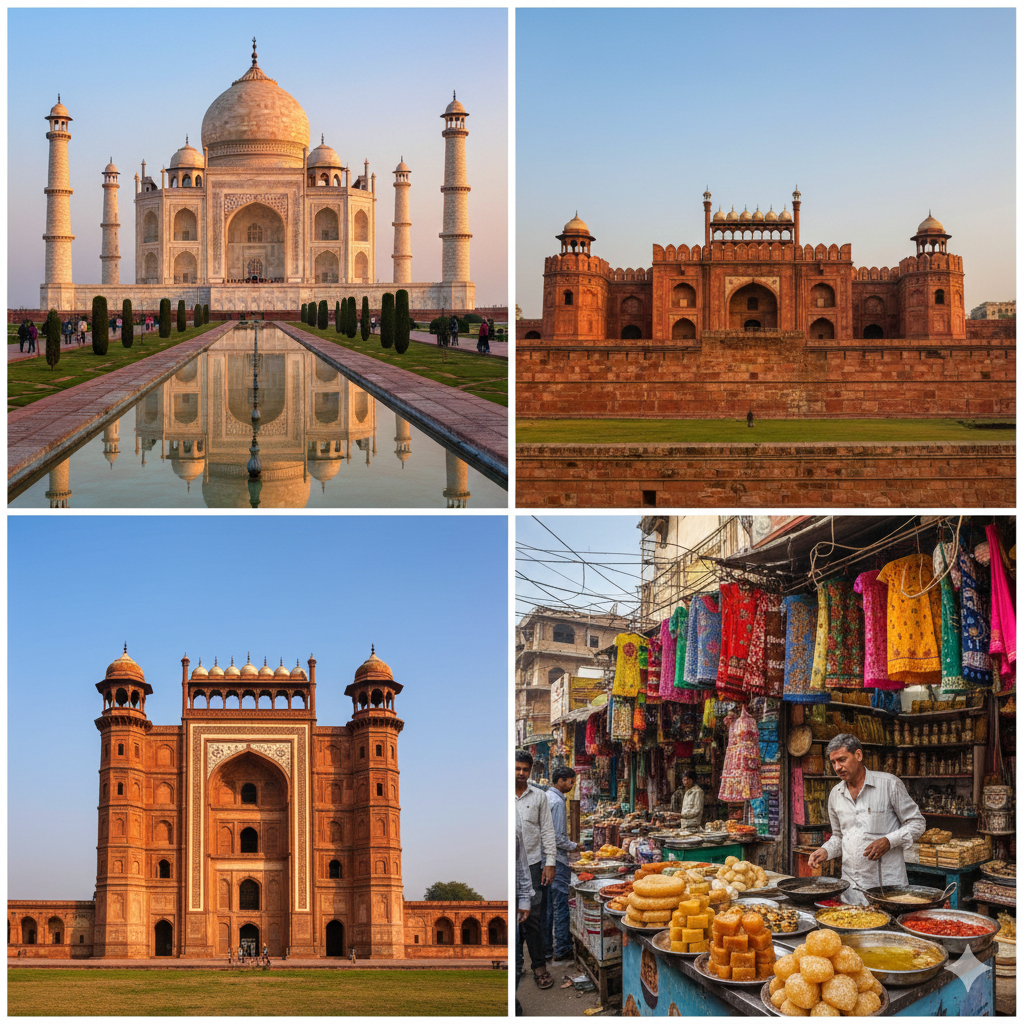
Finding your way around Agra feels natural, thanks to how close everything is. Because sites sit near one another, hopping from place to place takes little effort. Trains that move fast help you cover ground without wasting hours. Roads built for speed link key spots smoothly. Tour paths designed with clarity keep steps simple. With less time spent commuting, more moments open up for looking, walking, and lingering.
A morning light hits the white domes just right, revealing why so many come here. Not far off stands a red sandstone fortress where emperors once walked its halls. Some choose to linger near quieter spots like Mehtab Bagh across the river. Others head straight for marble workshops tucked behind old alleys. Each path gives shape to the city differently. Few places hold time quite like this – crowded yet still somehow hushed.
Now, travelers tweak trips to fit how they like to move, thanks to web platforms that let choices shape the route. Comfort, timing, hobbies – each detail slots into place without hassle.
Agra’s Role in the Golden Triangle Circuit
Agra sits right in the middle of a famous travel loop that joins Delhi, Agra, and so on to Jaipur. Where Delhi tells stories of power through government buildings, Jaipur speaks louder with royal forts built by Rajput kings. Meanwhile, Agra breathes life into Mughal tales – passion carved into stone, craftsmanship shaped by empire.
Agra pulls focus on many high-end trips through India’s Golden Triangle, thanks to its global draw. What sticks with travelers? The powerful impact of its historic structures – those moments become the core memory of the trip.
Most who visit North India find themselves stepping into Agra, whether planned or not. Just one full day can etch images deep into memory.
Conclusion
What makes Agra stand out isn’t just a single structure, but rather stories carved in stone, whispered through time. Though the glowing Taj Mahal draws eyes, life hums elsewhere – markets crackle with noise while gardens hold their breath. Experiences here stack like pages in a book, deep but quick to absorb. One sun-up to sun-down holds enough to fill memory without crowding it.
Agra stands firm, shaped by time yet untouched by change, no matter how you arrive – through a Delhi-Agra itinerary, a trusted online platform, or an upscale journey across India’s Golden Triangle. History draws people here. So does beauty. And stories that linger long after the visit ends. It remains ready, not because it tries, but because it simply is: vivid, rooted, echoing through every traveler who walks its paths, particularly those guided by Majestic Taj Tours.
FAQs
Q1. Why is Agra so famous around the world?
Agra is globally famous for the Taj Mahal, a UNESCO World Heritage Site and one of the Seven Wonders of the World, symbolizing eternal love and Mughal architectural brilliance.
Q2. Can Agra be covered in one day?
Yes, Agra can be comfortably explored in one day by visiting the Taj Mahal, Agra Fort, Mehtab Bagh, and local markets with proper planning.
Q3. What are the top places to visit in Agra in one day?
The must-visit places include the Taj Mahal, Agra Fort, Itimad-ud-Daulah (Baby Taj), Mehtab Bagh, and Fatehpur Sikri (if time permits).
Q4. What is the best time to visit Agra for a day trip?
The best time to visit Agra is from October to March, when the weather is pleasant for sightseeing and photography.
Q5. Is Agra worth visiting apart from the Taj Mahal?
Absolutely! Agra is rich in Mughal history, forts, gardens, tombs, and street food, making it more than just the Taj Mahal.
Q6. How far is Agra from Delhi and how long does it take?
Agra is around 230 km from Delhi and can be reached in 3–4 hours by car via the Yamuna Expressway or by train.