Agra holds fame among India’s top historical spots, pulling people globally through grand buildings from the Mughal age, tales of love, and sights that never fade. Arriving here for the first time, you find famous sites mixed with local flavor – places full of depth yet reachable without much time needed.
Some visitors fit Agra into broader North Indian trips, while others take a fast taj mahal day trip from Delhi by train just to see the iconic monument in a single day. History fans and casual wanderers both find something meaningful here. Not every spot gets noticed during a tight schedule, yet smartly arranged visits cover key sights without rushing. A strong start comes from picking meaningful places, letting the city reveal itself slowly, and being helped sometimes by teams like Majestic Taj Tours, who keep things moving quietly behind the scenes.
The Taj Mahal In Agra
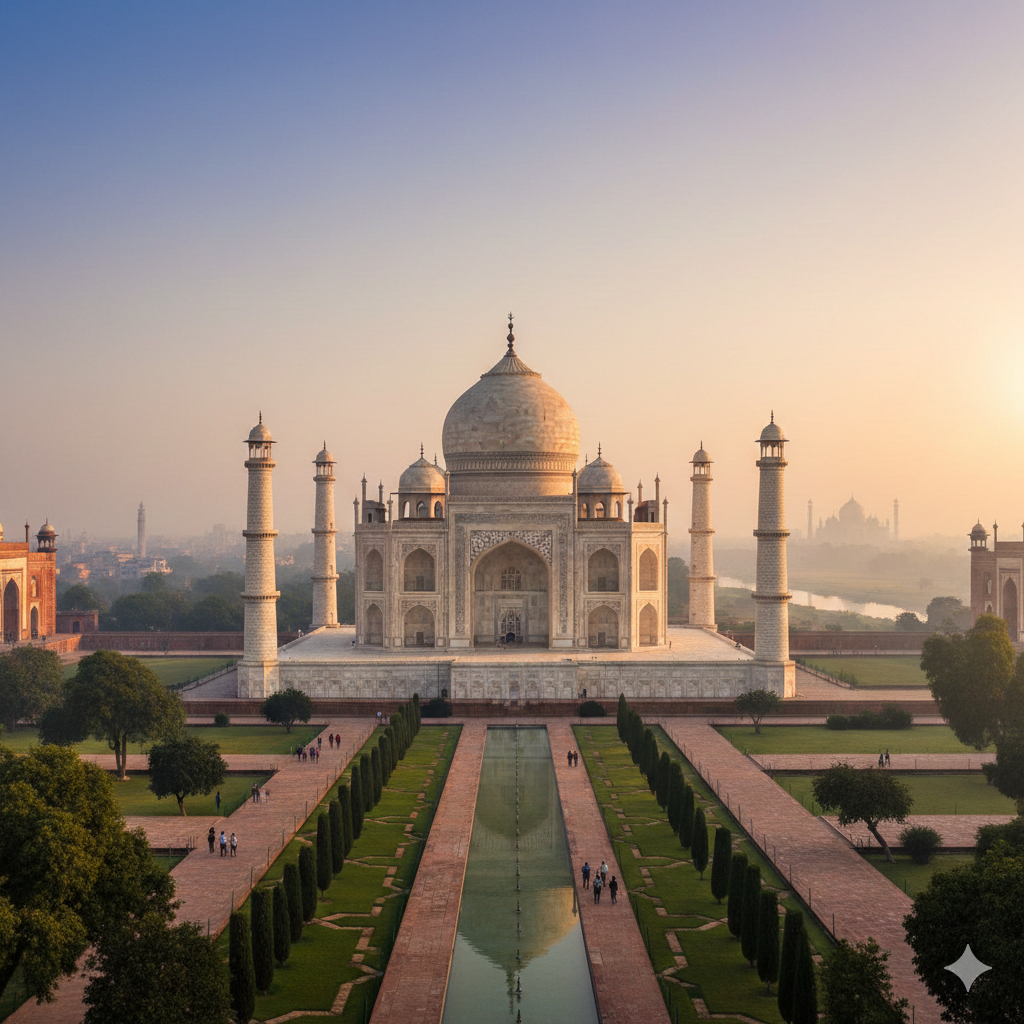
A sunrise in Agra often begins with footsteps toward the Taj Mahal, counted among the World’s seven wonders and designated by UNESCO. Rising centuries ago on the command of Shah Jahan, it holds the stillness left behind by Mumtaz Mahal. White stone curves into domes that catch light like stories do – slowly, surely. Love shaped this monument, yes – but also skill carried through generations of craft. Marble breathes differently here; history settles in its shadow.
Early mornings bring gentle light and thinner crowds, making them ideal for taj mahal tours. Guided strolls often reveal details in stone etchings, flowing script, and gardens built with perfect balance – common on most itineraries. Though Agra holds many sights, this mausoleum defines its worldwide name, always anchoring day trips to the city.
Agra Fort: Mughal Power Revealed
A stone’s throw from the Taj Mahal sits Agra Fort, also recognized by UNESCO, worth seeing, especially on your first trip here. Built mostly with red sandstone, it became home to Mughal rulers over many decades. Inside its walls, life unfolded across centuries under imperial rule.
Step inside, where grand rooms meet quiet prayer spaces tucked beside open yards and railings that frame glimpses of the Taj far off. As part of Agra local sightseeing, Agra Fort reveals layers of imperial life, military planning, and architectural grandeur shaped by changing rulers.
Mehtab Bagh at Sunset with a View of the Taj Mahal
Right by the Yamuna River, Mehtab Bagh faces the Taj Mahal with quiet grace. Laid out to mirror the monument’s balance, it draws visitors when daylight fades. As evening settles, the garden becomes a still frame for golden light on marble.
Unlike crowded landmarks, Mehtab Bagh offers space to slow down. Soft evening light creates ideal conditions for photography, while the peaceful surroundings provide a break during busy Agra one day tour schedules. Though understated, this garden naturally complements visits to Agra’s grand monuments.
Tomb Of Itimad Ud Daulah, The Baby Taj
A small gem tucked away along the Yamuna, the Tomb of Itimad-ud-Daulah stands quietly before its more famous cousin arrived. Though lesser known, it shaped what would come – its walls whisper craftsmanship through tiny stones set in perfect balance. Where grandeur might shout, this one leans close, speaking in patterns carved with care. Before white domes ruled the skyline, symmetry found an early voice here. Marble takes center stage, yet feels light, almost fragile in daylight. Craftsmen tested ideas later perfected far downstream. Beauty hides in seams where colored bits meet stone without noise. Not loud, never bold – but impossible to forget once seen.
A visit here adds depth to Agra’s usual sights, slowing things down without losing wonder. Though small, it catches attention with calm spaces instead of crowds. First-timers find the hush refreshing after busier landmarks nearby.
Fatehpur Sikri: Once a Mughal Capital, Now Empty
Fatehpur Sikri sits roughly 40 kilometers away from Agra, rising under Emperor Akbar’s rule before being left behind when water ran low. Though once bustling, it now stands quiet, filled with wide courtyards, royal homes, and places of worship. Among its landmarks looms the towering Buland Darwaza, a gateway that still draws eyes upward. What remains tells of ambition shaped by stone, then undone by nature’s limits.
Fatehpur Sikri sits just beyond the city limits, yet often slips into longer Taj Mahal trips or day-long outings. Worthwhile for newcomers who have hours to spare, its intact buildings reveal how Mughal rulers designed cities and lived daily.
Jama Masjid, where spirit meets stone
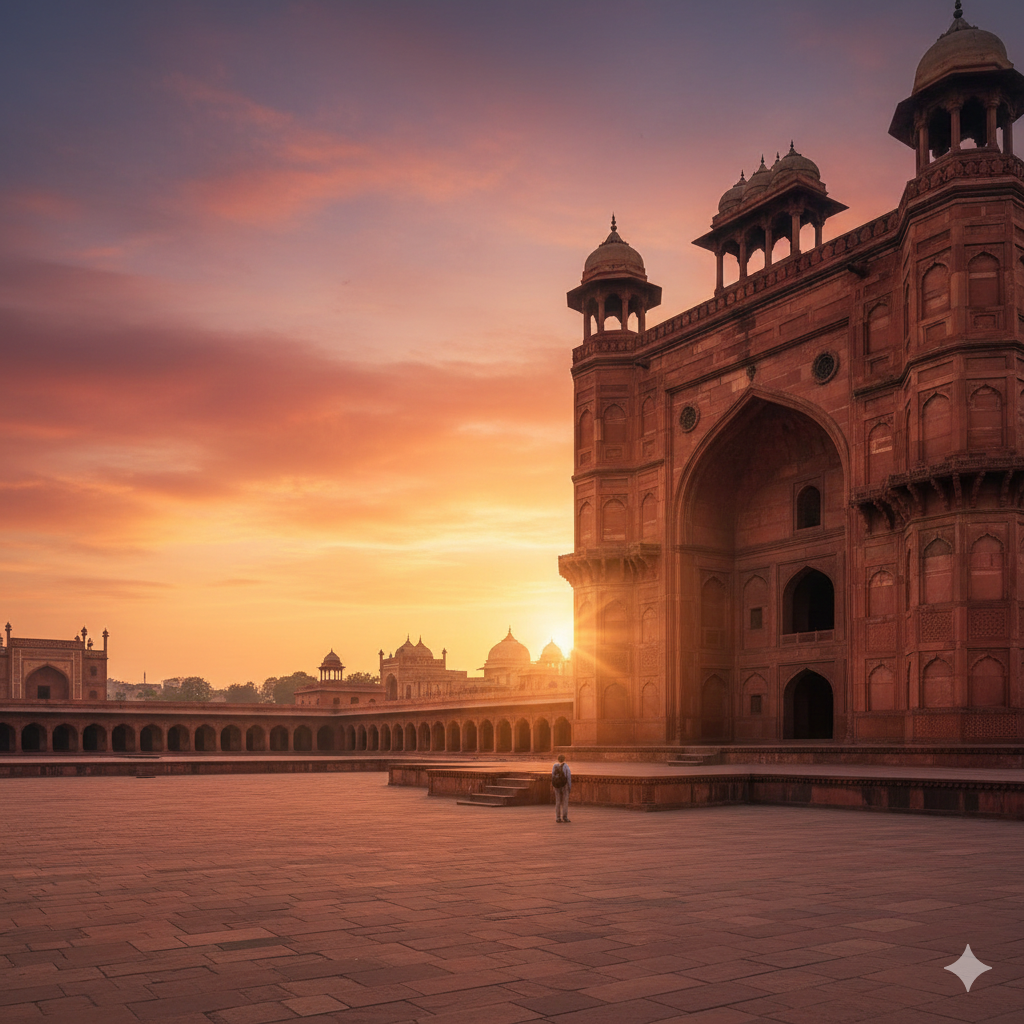
Jama Masjid sits close to Agra Fort, standing as a key place of worship in the city. Not built by royalty but their heir, it was raised under Jahanara Begum, daughter of Shah Jahan. Red sandstone forms its bones, while streaks of white marble add quiet contrast here and there.
What stands out to many is how quietly the mosque fits into each day. Not just a stop on the list, it slips into routines people follow now. Take Jama Masjid during an Agra visit – it opens a view past grand landmarks. Life moves around it, prayers still held as they have been. Tradition isn’t locked in stone here; it walks through courtyards every morning.
Kinari Bazaar: A Glimpse Into Everyday Life
Wandering through Kinari Bazaar feels like stepping into a different rhythm than the quiet stone of Agra’s old sites. Close to Jama Masjid, the lanes hum with color, each turn revealing wooden carvings sitting beside silver bangles. Fabric rolls drape over stalls where spice-scented air drifts from food carts nearby. Every corner holds something handmade, whether it’s stitched cloth or sweets stacked on banana leaves.
Exploring this market adds cultural texture to an Agra one day tour, offering interaction with local artisans and shopkeepers. Bargaining is common, and every turn reveals something handmade or aromatic.
Mughal Heritage Walk Through Old Delhi
Wandering beyond the usual paths, the Mughal Heritage Walk leads through quiet villages close to the Taj Mahal. Ruins from centuries ago sit beside everyday life, unfolding piece by piece. Instead of crowds, there are conversations with people who live nearby. Along the riverbank, the past mixes with the present quietly. Each step reveals something missed by most tourists.
Right off the bat, seasoned guides at Majestic Taj Tours point people toward this stroll for something different than typical tours. Not just another checklist stop, it pulls first-timers in through layers of past moments, everyday life, because real voices shape what unfolds along the path.
Taj Museum: Exploring the Monument’s History
Inside the Taj Mahal grounds, a small museum holds old sketches showing how the building was designed. Alongside these, tiny replicas give shape to what once existed only on paper. Documents from long ago line glass cases, telling stories of effort and vision. Those curious about stone work and symmetry find here quiet answers. Craftsmanship from the Mughal era takes form through ink, wood, paint, and time.
A visit feels fuller when the museum is part of it, revealing layers behind the Taj Mahal’s design and past. What might seem like a brief stop still brings clarity that shapes how you see everything else.
Agra One Day Trip Planning
Getting around Agra is easy thanks to its small size, perfect for packing everything into just one day. Most visitors hop on a train from Delhi, showing up early at the Taj Mahal before crowds build. Sightseeing flows smoothly when starting off right after sunrise.
Starting early helps fit in the Taj Mahal, Agra Fort, a midday meal, then Mehtab Bagh or Itimad-ud-Daulah later. When timing works well, new travelers see key spots calmly, particularly if guides handle planning details smoothly.
When to Go to Agra
Agra feels just right from October through March, thanks to mild weather that makes walking around easier. When the sun first comes up, it is the perfect moment to see the Taj Mahal. Later in the day, once shadows stretch long, gardens come alive, and the markets begin to hum.
Heat often peaks during summer, yet monsoon times swap high temps for damp air. When trips align with better weather, comfort tends to follow – useful if time is limited. Scheduling around these shifts makes movement easier, even when plans feel fixed.
What First-Time Travelers Should Know
Starting a journey? Buy entry passes early, particularly if heading to the Taj Mahal. Shoes matter – pick ones that handle long stretches on foot. When near historic sites, follow local guidelines, such as limits on taking pictures inside specific zones.
Early mornings cut down on heat while making movement through crowds easier. Picking guided visits to the Taj Mahal means less time waiting plus smoother entry. Water in hand keeps energy steady when walking under sunlit paths.
Agra pulls you into India’s past through stone and story, where grand buildings meet everyday life in surprising ways. The famous Taj Mahal stands alongside lively bazaars and quiet green spaces, each corner fitting close without feeling tight.
A journey shaped ahead of time turns Agra’s sights into something clear, even calming, for those seeing it all for the first time. Arriving by rail from Delhi just to see the Taj Mahal or sleeping here past dark, either way counts. Majestic Taj Tours builds plans that move smoothly through the hours, fitting more than expected. Each full-day path shares what Agra really feels like when seen up close.
Frequently Asked Questions (FAQs)
Q1. What are the must-visit places in Agra for first-time travellers?
First-time visitors should not miss the Taj Mahal, Agra Fort, Mehtab Bagh, Fatehpur Sikri, and Itimad-ud-Daulah, as these places showcase Agra’s rich Mughal history and architecture.
Q2. How many days are enough to explore Agra?
Agra can be comfortably explored in 1–2 days. One day is enough for the main attractions, while two days allow a relaxed visit including nearby sites.
Q3. What is the best time to visit Agra?
The best time to visit Agra is from October to March when the weather is pleasant for sightseeing and outdoor exploration.
Q4. Is Agra safe for first-time tourists?
Yes, Agra is generally safe for tourists. However, travelers should stay alert in crowded areas and avoid unofficial guides.
Q5. What is the best way to reach Agra from Delhi?
Agra is easily accessible from Delhi by car, train, or bus. The Yamuna Expressway makes road travel fast and convenient.
Q6. Are there any entry tips for visiting the Taj Mahal?
Visit early in the morning for fewer crowds, carry a valid ID, and avoid prohibited items like large bags and food.